Showing posts with label Teacher Voice. Show all posts

Thursday, April 18, 2019

Coffee County Teachers Stage “Walk In” to Raise Awareness about Vouchers


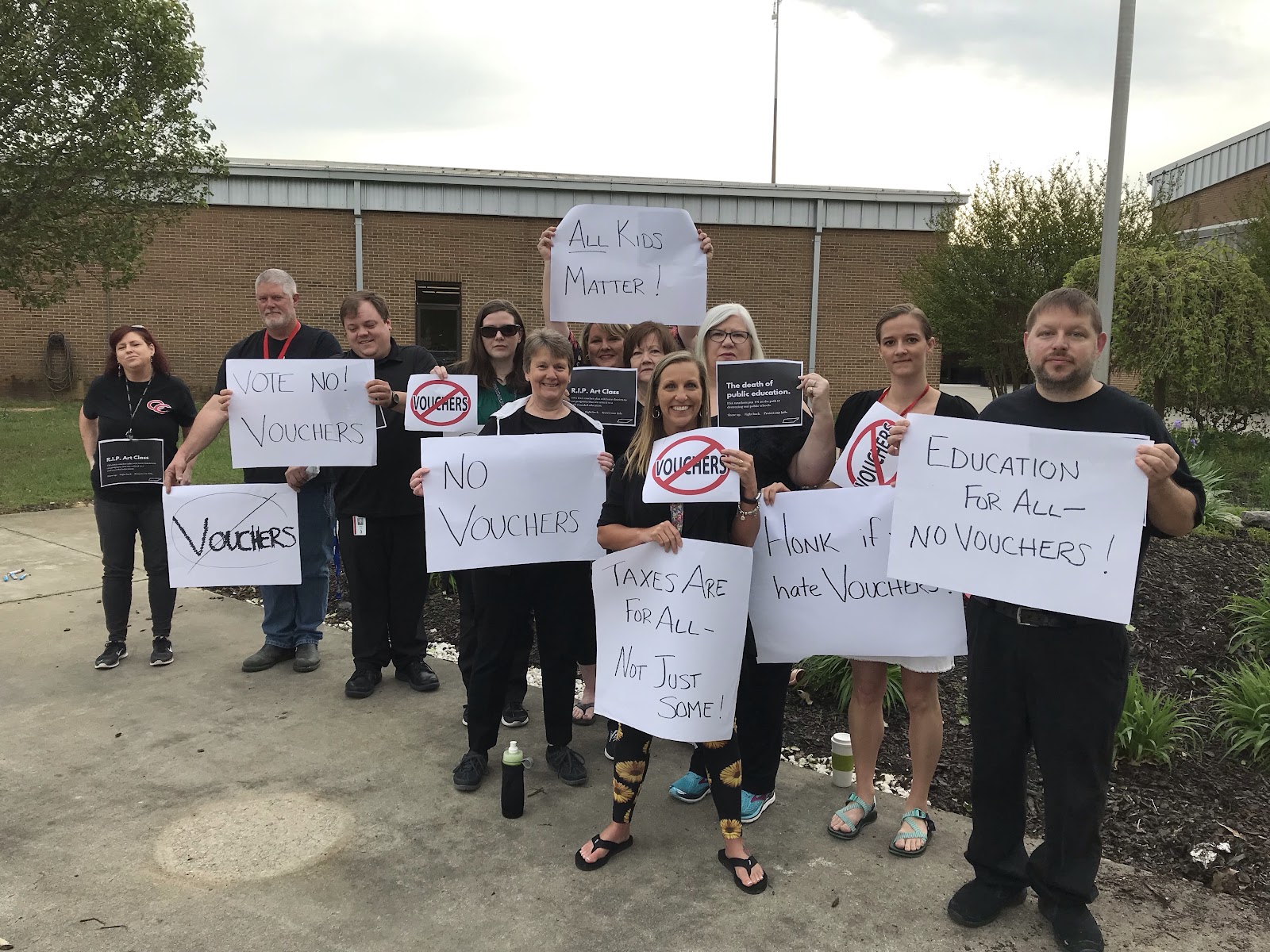
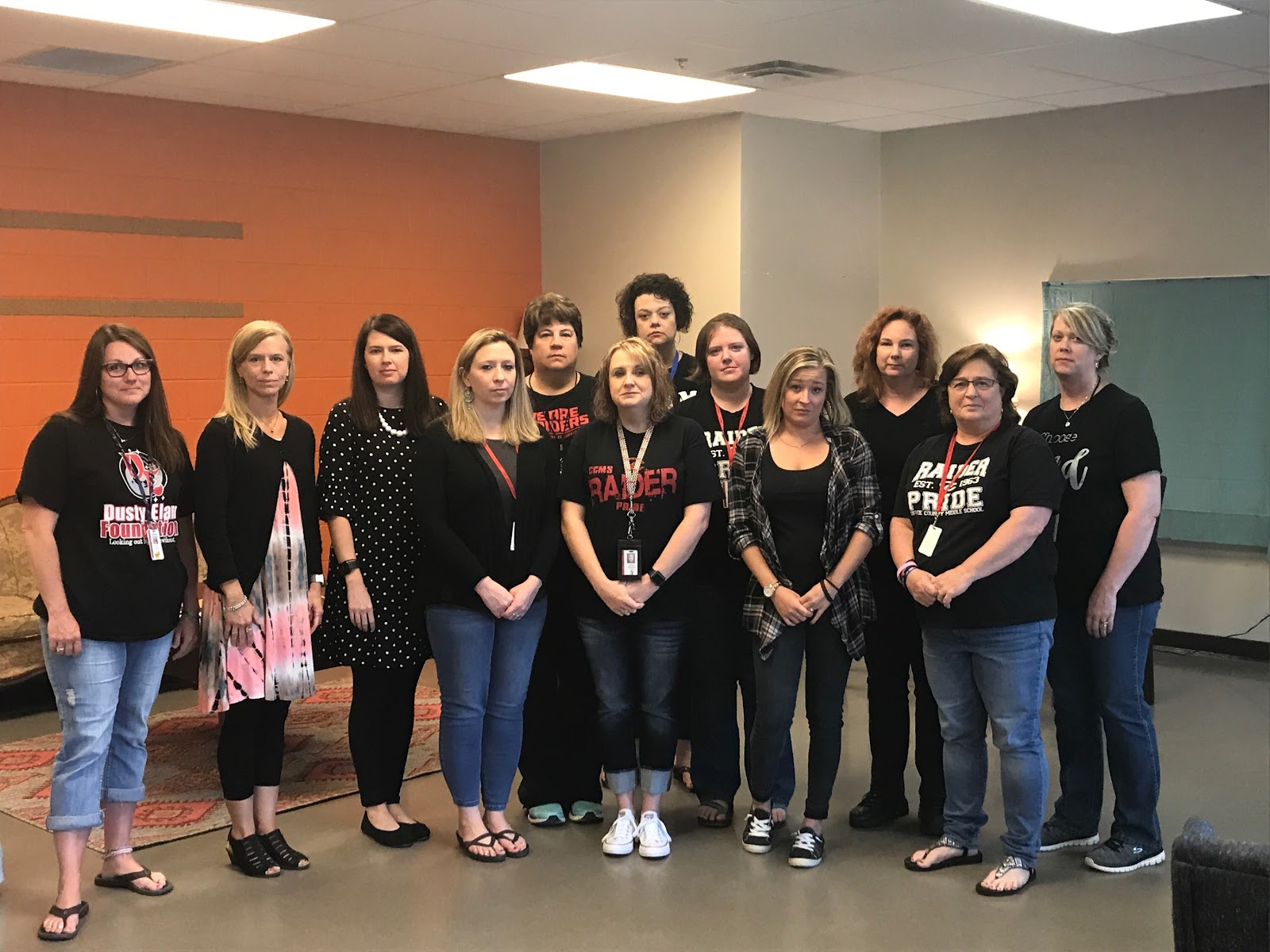
On the morning of April 17th, a group of teachers gathered at Coffee County Central High School and Coffee County Middle School for a “Walk In” to raise awareness about the current Educational Savings Account (also known as voucher) bill that is working its way through the Tennessee Legislature. A “Walk In” is when teachers gather in front of the school building while they are off-duty before school starts and hold up signs for parents to see while dropping their children off at school. This event was organized by Mike Stein, the President of the Coffee County Education Association.

House Bill 939/Senate Bill 795, if passed, would rob over $110 million from public education while causing local property taxes to rise. Eligibility for the ESA program initially is limited in counties with at least three schools in the bottom 10% — but zoning in a bottom 10% school is not required. Due to state law, there will always be a list generated of the bottom 10% of schools. That will play a role in vouchers expanding to other counties across Tennessee. This has happened in other states.

In Arizona, 75 percent of all ESAs are used by the affluent families zoned for A or B rated schools. Most vouchers in Indiana now go to affluent families who never intended to send children to public schools. The ESA program is designed for families who already send children to private school or homeschool and does nothing to improve struggling schools across the state. In fact, those schools will be weakened under this current legislation.
Currently, taxpayers do not currently subsidize private school tuition, but as more families take ESAs for their incoming kindergartners who they never planned to send to a public school, a new ongoing cost will shift to local taxpayers. The Senate version of this bill will allow funds to be used for homeschooling, which has great potential for abuse. ESAs in other states have experienced a significant amount of fraud and abuse. These states believed they had proper safeguards in place to prevent fraud and abuse, but still lost hundreds of thousands of taxpayer dollars.

Additionally, students who use ESAs for private and homeschool are not held to the same accountability standards as public schools, putting those students at risk for falling behind their peers in traditional public schools. Private schools do not have the same certification and expertise requirements as public schools. In the House version, voucher students do not have to take state tests in Social Studies and Science, and in the Senate version students will not have to take any type of state test, which can be substituted for any nationally-normed test. ESAs and vouchers don’t work and actually harm student learning. Research clearly shows voucher students fall behind their peers who attend to private schools or homeschooling.

When Mike Stein e-mailed Rep. Rush Bricken stating his concerns about this bill, Mr. Bricken sent this reply: “I appreciate you taking the time to let me know how you feel about HB 939. I support and believe in public education. I am not fully for this legislation but want to wait to see what comes out of committees before I finally decide.” Despite all of the pitfalls of this legislation, Rep. Bricken is hesitant to do what many other lawmakers have done and stand on the side of public education and against this bill. He will vote on this bill within the next few days and can be reached at (615) 741-7448 and rep.rush.bricken@capitol.tn.gov. If you don’t live in Coffee County, you can quickly contact your representative by going to  https://actionnetwork.org/letters/no-to-vouchers.

Wednesday, March 15, 2017

Room for the Human Element


This piece was originally posted on tnteachertalk.com and is from a colleague of mine from the Hope Street Group Tennessee Teacher Fellows, which is a teacher fellowship organization dedicated to amplifying teacher voice. Kim Pringle is a recipient of the ETS Recognition of Excellence award for Principles of Learning and Teaching and has recently been appointed as an assistant principal at Snow Hill Elementary School in Chattanooga. Before becoming an assistant principal, she worked as a music teacher, a Teacher on Special Assignment (TOSA), and a RTI Coordinator.

The great struggle of educational change is not lack of initiative, or innovation, or standards, or motivation. It is a diversity of resources and cultures. What works in one environment is doomed to fail in another. There is no one-size–fits-all anything when it comes to the very human act of educating the children of a community.

There are many different types of schools. Some are productive and innovative and some crush the spirit of innovation before it can grow and flourish. Some are tech-centered and engineering-minded, while others are pitifully technology poor. Some embrace best practices and collaboration, while others are seemingly stuck in the past with doors and minds closed to one another.

If I could communicate one thing to educational policy-makers, it would be to find room for the human element. So often it seems that educational policy only focuses on data and test scores. I believe this human element is the thing which teachers see so intimately and bemoan as the un-testable variables. It comes in the form of heartbreaking stories: Mom and dad were fighting last night...again...The electricity was turned off three days ago. I hate cold showers...My baby sister screamed all night. Will she ever stop?...We've been living out of a tent, but we lost our campsite today...I wanted to come to school, but mom didn't wake up...My dad died last week, but no one will talk about it...My shoes don't fit, but I don't want to tell my mom, because we don't have any money...And the day-to-day speedbumps in the road of the educator: We're a sub short today, so we had to divide Mr. Allen's class...You're getting 5 extra kids...Fire drill today at 9:30 am!...Cookie-dough sale kick-off celebration in the gym at 2:30 pm...Pep-rally on Friday!...We're experiencing problems with the WiFi again.

We want the best for our kids. We move mountains for them—of fundraiser cookie dough and wrapping paper and coupon books. And we do all of this to get the funds we need to have the right technology in their hands or to have books for them to read. But it isn't equal. Not all communities have the same luxury of time and disposable income to make those sorts of things happen. Title I funds are supposed to reduce the inequity but still fall short. In addition, many schools who do not qualify for Title I funds struggle to provide for their students when the population does not quite reach the poverty threshold for Title I, yet cannot afford to self-fund.

Critics of public education often depict educators as inadequate for the job or unmotivated to teach students properly. I would argue that we are very motivated for our students. Motivation isn't the issue. It likely comes down to resources and culture. Have we enabled the resources needed for change? Have we dealt with the human needs and cultural needs creating barriers to academic gains?

So, though I appreciate the information that assessment data provides, I plead—look beyond the statistics and into the numbers and see the children they represent. Look beyond the school and see the community it serves. Educating our children is a beautiful, human act. Let's keep the humanity in the process.

Sunday, January 22, 2017

We Shall Overcome


Two major events dominated the news cycle last week: the presidential inauguration and the women’s march the following day. Before the march, I overheard white female teachers, whom I highly respect, discussing in person and on social media, the pointlessness of the march. After all, why march for women’s rights, which is something that women already have? Why should people go out of their way to demonstrate that they’re sore losers? If people are going to march for something, why not make it for a cause that is worthwhile?
To those who believe that women have equal rights to men, that the women’s march was just a bunch of sore losers showing off, and that the march wasn’t for a just cause, to you I say, I wish you had been there. I wish you could have felt the positive vibes emanating from the largest protest in this country’s history. Millions of people took to the streets because they wanted to stand next to their brothers and sisters in order to take a stand for human rights and against sexism, racism, and xenophobia. Each person who attended one of the marches had a specific purpose for being there, but everyone who marched had that common goal. People across the world have seen a rise of destructive populist political leaders. It was time for the people’s voice to be heard in a way that Thoreau, Gandhi, and King would have been proud. The nonviolent resistance has begun.
President Trump’s inauguration speech, like his campaign, was littered with stretched truths and bold inaccuracies. However, one thing he said that will hold true through the duration of his administration is that the power lies with the people. As he delivered his speech and attempted to appear as a man of and for the people, representatives of corporate America (like the CEOs of Exxon and Hardee’s) stood directly behind him. The people are not blind.
We, the people, were paying attention when, within hours of becoming President, funding for the National Endowment of the Arts (like PBS and NPR) had been cut, as well as a discount on FHA home mortgage rates that was enacted under President Obama. We’re listening to Trump staffers when they say that his proposed budget will include eliminating funding for Violence Against Women Grants, the Office of Energy Efficiency, the Paris Climate Change Agreement, and the Minority Business Development Agency. We noticed when WhiteHouse.gov immediately deleted pages on LGBT rights, civil rights, climate change, and health care from its “issues” section after Donald Trump took the oath of office.
This brings me to why I decided to march. In the words of Martin Luther King, Jr., I believe in my core that an injustice anywhere is a threat to justice everywhere, and I recognize that the next four years are going to be a fight. The time to look away has ended. I intend to set an example for the the students I see every single day in my classroom and for my two young daughters at home. If you watched the Betsy DeVos confirmation hearing, then you can understand why I marched for them. I also marched for my wife, my mom, my step-mom, my sister, and all of the women in this country who, despite having the right to vote, have never been treated as equals. I carried their baggage on my shoulders, too. I feel the agony of 19-year-old Nina Donovan of Franklin, TN when she mentioned in her now viral poem “Nasty Woman” that, “even when women go into high-paying careers, their wages are still cut with blades sharpened with testosterone. Tell me why the work of a black woman and an hispanic woman are only worth 63% and 54% of a white man’s paycheck? This is not just a feminist myth. This is inequality. So we are not here to be debunked. We are here to be respected.”

By itself, the women’s march is not enough to earn that respect, but it’s definitely an excellent first step. It got everyone’s attention and dominated the news cycle and social media. Some of the best lessons that I can teach are the ones I give by my own example; this must include staying informed and paying attention to what’s going on, and then following up with more non-violent resistance. If last week’s marchers can channel this momentum into committing to doing the same thing, then we, the people, will begin reclaiming power from the wealthy oligarchs and plutocrats who were recently chosen to run this country.

Monday, January 2, 2017

Living the Dream


New Year’s resolutions came early for me this year, just like they have for the past thirteen years, actually. When the first semester of the school year comes to a close, I begin my annual two week period of introspection about what’s working in my classroom and what’s not. I have been teaching long enough to develop an ever-growing bag of tricks; however, since students change every year, finding that perfect balance of the right activities and the right time is quite challenging. That’s why good teaching is both a science and an art.
Over the break, I finished reading a pedagogy book, Visible Learning for Literacy: Accelerating the Practices that Work Best to Accelerate Student Learning, which I highly recommend to any K-12 literacy teacher. I am proud to say that I am already incorporating many of the things mentioned in the book, but I realized that there is room for me to do them better. For example, students’ reflection over their work is the number one most effective learning strategy. In my gradeless classroom, student reflection is a vital component of the process, but I need to do a better job of providing my students with clear learning targets so they have an increased understanding of where they’re going before they get there. This should result in my students’ reflections being more authentic which, in turn, should increase their retention of the material.
I also watched a webinar during my break about the purpose of homework. Over the years, I my position about homework at the high school level has certainly wavered. According to my pedagogy book, research shows that homework is more effective for student learning the older the student gets, but only if the homework is something that the students can do quickly and independently. Alice Keeler, an education goddess who conducted the webinar, took the position that homework is rarely, if ever, necessary, regardless of the grade level. She made the argument that what teachers spend time on in class is what students will regard as the most important information, and that parents should not be expected to help their children with their homework because they are oftentimes too busy or unable to help, and they’re not necessarily masters of the content that the student needs to learn.

Approximately half of the work my students received during the first semester was homework. Their completion rate began very low and only meagerly increased during the course of the semester. I took quite a bit of time to contemplate the homework that I assigned. Were they capable of doing it on their own? Was it purposeful? Did they see the benefit of doing the work? I came to the conclusion that almost all of them were capable of doing the work, and it was purposeful, but I was missing buy-in. When it came down to doing homework in my class versus doing homework in another class, rarely was the the work in my class done first. Further, I learned from talking to my students that after school jobs combined with the length of my homework contributed to their low response rate. I plan on continuing to assign homework during the second semester, but I need to change nature of the work, make it more time-efficient for them to complete, and help them understand how completing the homework will make them better students and better people.

The opportunity to reflect on my teaching practices and rework how my classroom operates is one of the things that I truly enjoy about being a teacher. How many professions exist where the employee has so much autonomy over day-to-day operations? Since seventh grade, it’s always been my dream to be a great public school teacher. In fact, I want to be one of the best teachers that my students have ever had; however, in order for me to accomplish that dream, I need to continue to be introspective and adaptive to their needs. Each class period inside of each school day within each school year is an opportunity for me to experience my dream. The new calendar year and the new semester offers a great opportunity for my students and myself, and I can’t wait to get started.

Wednesday, December 28, 2016

2016: A Year in Review


2016 has been an amazing year, and it has served as another reminder to take the bad with the good. I would like to reflect on the top five educational stories, both personally and as a public school teacher in Tennessee.
At the top of my list is having the privilege of attending the national teacher of the year ceremony at The White House. I traveled to The White House because I was recognized as one of America’s most distinguished educators, and I participated in honoring Ms. Jahana Hayes as the national teacher of the year. The ceremony itself only lasted 30 minutes, beginning with a short speech from Ms. Hayes, who is a history teacher at John F. Kennedy High School in Waterbury, Connecticut. Her passion-filled opening remarks set a powerful tone and her enthusiasm for the teaching profession was palpable.

On the way back to Nashville, I had time to reflect on attending this absolutely sublime White House event. Continuing the spirit of this ceremony the best way I know how, I am committed to help my fellow educators elevate and express their voices and tell their stories. Teachers matter. No one knows how to improve the educational landscape better than us. We are the experts, and when we speak in unison, educators have a remarkably strong voice. It begins with educators telling their own stories and having honest conversations with stakeholders about what’s working in our profession and what’s not.

Next on my list is the complete meltdown of TNReady. Though not completely their fault, the Tennessee Department of Education took a black eye on this one. The failure of TNReady sent shock waves throughout the state’s public education system. Elementary and middle school students didn’t even get to take the exam, while high school students across the state went through the motions of taking the test and didn’t take it seriously. A state law was passed holding teachers harmless on their evaluations from these test scores, but this law doesn’t apply to schools and school districts. Meanwhile, TDOE changed testing vendors from Measurement Inc. to Questar and has some significant rebuilding to do in terms of its efficacy.

Number three on my list is something that happened within the last few days, when TDOE released its plan for public review of the Every Student Succeeds Act (ESSA). In case you haven’t been following, ESSA is the federal law that replaced No Child Left Behind, and it requires each state to develop its own plan on how it will meet the needs of its own students. Along with three other teachers from the high school, I recently attended a town hall meeting in Nashville where Commissioner McQueen and some of her TDOE cohorts explained the overview of their plan. I believe that TDOE’s ESSA plan needs some revision, but, overall, it sends a clear message that “all means all”--that TDOE is committed to educating all of Tennessee’s students, regardless of whether they are rich or poor, receiving special education services, or English Language Learners who just moved here from another country.

Number four on my list is the revelation from TDOE that the state’s science scores on the National Assessment of Educational Progress (NAEP) are “above the national average for the first time ever, doubled the national average for student growth, eliminated the performance gap between male and female students, narrowed the performance gap between white and black students in both grades, and narrowed the performance gap between white and Latino students in fourth grade.” Tennessee had previously scored above the national average in English Language Arts and math. This announcement is further proof that the public education system in Tennessee is on the right track. Historically, Tennessee has ranked at or near the bottom in public education.

Rounding out my top five education stories of 2016 is Mr. Trump’s appointment of Betsy DeVos as the future U.S. Secretary of Education. Putting a pro-charter and pro-voucher champion at the head of the nation’s public schools will certainly have “yuge” ramifications. One only needs to look at the education systems in Michigan and Louisiana (both are below the national average and dropping) to understand the devastating effects of diverting money from public schools in the name of school choice.

Sunday, October 23, 2016

Remaining Neutral in a Time of Polarization

Image result for politically neutral dog
As a teacher, I have always tried to remain politically neutral in class. Part of the reason for this is because I am in a position of authority, and I don’t want to impose my beliefs on my students, whose views, though less informed because of their youth, are every bit as valid as my own. The other reason why I try to remain politically neutral is because I want my students to think for themselves. I provide them with articles about what’s going on in the world, and I allow them to write and discuss these articles with as little input from me as I can muster. As a high school English teacher, I also attempt to connect centuries-old literature to modern-day events while allowing my students to find their own evidence-based paths toward truth.
Remaining neutral is incredibly difficult for me--especially during what has been, arguably, the most polarizing presidential election cycle in our country’s history. It’s also difficult because I have been politically active since I can remember, and I love having reasoned political debates with others. Further, I know of teachers who are not neutral, and that increases my desire to discuss my own beliefs and provide my students with an opposing viewpoint.
At the same time, I wonder if my silence is misconstrued as complicity for the racist, misogynistic, and deplorably unintelligent child-like banter that’s unbecoming of a world leader. Elie Wiesel, who wrote a novella titled Night about his experiences surviving the Holocaust, once said, “We must always take sides. Neutrality helps the oppressor, never the victim. Silence encourages the tormentor, never the tormented.”
Therein lies my dilemma. Supporters of Trump and Clinton each claim that they are the tormented and the other candidate is the tormentor. Who am I to say that either of them is wrong? At the same time, when I don’t publicly stand against hate-filled rhetoric, what example am I setting for my students, and for my two young daughters?
As written in a recent Washington Post article: “Words matter. So do actions. Even when children don’t listen to what we say, they pay very careful attention to what we do. Children are watching. They are listening. They are learning from the example we set as their parents and teachers—not only from what we say and do, but from what we accept when it comes to the words and actions of others. We have to show them that hatred, sexism, racism, disrespect, and threats of physical violence are not okay. They’re unacceptable at any age — for a kindergartener, a high school student, or a presidential candidate.”

Trump’s words and actions go against everything I teach my students and my children. At the same time, the political polarity that straightjackets our democracy will eventually ruin it if people don’t start thinking for themselves again. I want my students to take a stand against social injustices because their minds and their hearts move them to speak up. I want my students to discern false from factual political arguments so that they can make informed decisions, thereby forcing political candidates to stop appealing to the lowest common denominator by using words that say a lot but mean nothing. In the end, it is the children who are going to continue making this country great. Perhaps there is room for me to assert my own views and be a little less neutral, but, in doing so, I must be careful to keep from hindering my students’ thinking. After all, that’s what they enter my classroom for in the first place.

Wednesday, October 5, 2016

Why We Should Win with Winton


During my first six months of writing this column, I have made a concerted effort to focus on education topics that move me and, hopefully, are interesting to you, the reader. At some point, I always try to focus on the most important part of the education system--the students--and how they are affected by these different topics. Occasionally, it is necessary to delve into the political realm because politics and education are unfortunately inseparable.
There is currently a tightly contested state senate race in district 16 between the incumbent, Janice Bowling, and her challenger, Mike Winton. As a public school teacher and as a father of two girls who attend public schools here in Coffee County, education is my life. If you care about public education, as I do, then I implore you to cast your vote on November 8th for Mike Winton, who took time out of his day last Monday to talk to educators from across the district about how he could help us if he is elected.
In case you haven’t heard much about him yet, Winton comes from humble beginnings, being raised by a single mother who instilled a relentless work ethic that he carries with him every day as the owner of Sears in Tullahoma. During his meeting with teachers last week, I was impressed when he explained how he will use his work ethic to benefit teachers. When he’s not busy in the legislature, he plans on attending every school board and county commission meeting across district 16 that his schedule will allow. He wants to be visible and and available to his constituents. When asked what he would do if an education bill came along and he wasn’t sure how to vote on it, his answer was remarkably simple. He’d ask teachers. If time is pressing, then he would ask the state’s largest teacher’s association and greatest collector of teacher voice, the Tennessee Education Association, for their input.
Perhaps the thing that impressed me the most about Winton in meeting with him on Monday of last week is his understanding of how crucial it is for teachers to get their voices back by reinstating their collective bargaining power. Quick history lesson time: In 2011, the Republican supermajority damaged teacher voice by passing the Professional Educators Collaborative Conferencing Act (PECCA). This law severely limits what teachers can “bargain” about, thereby making it infinitely more difficult for teachers to improve their own working conditions. As a result, experienced teachers have been leaving the profession in droves, enrollment in teacher preparation programs in college has significantly decreased while our population is increasing with new schools being built every year, and Tennessee is in the beginning stages of what will become a severe teacher shortage in the near future. Naturally, all of this affects students who eventually will not have qualified teachers to instruct them.
Democrat Eric Stewart was the state senate representative for our district in 2011 and he voted against PECCA. Around the same time, this district was being redrawn, and the following year in 2012, Republican Janice Bowling was elected. She has, unfortunately, continued the legislature’s attack on teachers, as evidenced by her voting in favor of Senate Bill 151 last year, which makes the process more difficult for teachers to pay their teacher’s association dues. Also last year, she supported Senate Bill 027, which diverts public money into private schools for students who have individualized education plans and have one of seven specific disabilities. Senate Bill 027 opens the door for an expanded school voucher bill (like Senate Bill 999, which she supported) to pass the legislature in 2017--something that the Republican legislature has unsuccessfully tried to pass the previous five years under the guise of “school choice.
I truly hope that Mike Winton is elected our next state senator but, if that is not the case, our teachers and students need a representative who will not merely vote along party lines and will work with her colleagues to reverse the legislature’s assault on the education system. We need a representative who will listen to teachers and stand by our side when potentially hazardous education bills are introduced by lawmakers who are working on behalf of special interest groups who want to privatize education. We need a representative who recognizes that a state with a strong PreK-12 education system keeps people out of jail and is good for business.

Wednesday, September 14, 2016

Relationships Matter


I recently returned from a trip to Chicago where I attended the largest convening of Hope Street Group state teacher fellows ever assembled. Teachers from Tennessee, Kentucky, North Carolina, and Hawaii all assembled for two days so that we could share ideas on how to better collect and disseminate teacher voice in our respective states. Other than spending a couple of days with some of the most energizing solutions-oriented teachers in the country, one of the highlights of my trip was listening to our keynote speaker, Allan Blue.
Mr. Blue has a strong liberal arts background and majored in English and theater when he was in college. After teaching both of these subjects at the high school and community college levels for a number of years, he landed a job in the technology field quite by accident. A friend of his offered him a job as the creative director of a brand-new website called relationships.com. Haven't heard of it? That's okay, because neither has anyone else. It was a big flop. However, that experience led to his position of co-founding PayPal and, eventually, LinkedIn.
When asked about his advice for high school seniors, Blue suggested that they get work-like experience--meaning either job experience or volunteer work. He also advised that seniors should focus on how they can help others without expecting anything in return. Having a genuine interest in the success of others not only improves the fabric of society, but it is also an excellent way to learn how to be successful yourself. His final piece of advice for them is to learn how the workplace functions. After all, in order to move up the career ladder and experience the American Dream, it's crucial to see that the ladder exists, has rungs on it, and is waiting to be climbed.
Blue also discussed that what makes Silicon Valley successful is the underlying culture of innovation where people aren’t afraid to try new things and to fail. This is coupled with a constant blending of different companies, where people frequently leave one company to join another, share ideas with each other, and improve the newly-formed company. “Innovation happens,” he said, “when you put talent, opportunity, and a safe place to fail together.”
The fundamental theme of Allen Blue’s personal experiences and his advice to others is that relationships matter. He got his big break in the technology field because a friend observed his creativity and thought it could be channeled to help his internet business. As a result, Mr. Blue is now worth tens of millions of dollars.  His advice to high school seniors all centers around building relationships. Silicon Valley’s success is hinged upon people knowing and sharing ideas with each other with the common goal of continuous innovation.
The education field has much to learn from this. Teachers, school buildings, and even entire school systems notoriously function completely independent of each other. Case in point: Coffee County has three school districts and none of them collaborate with each other. They all share the common goal of educating the best that Coffee County has to offer; yet, the educators at each of these schools never share one in-service session and there’s no sharing of ideas, unless teachers reach out to each other on their own, which is a rare occurrence. The directors of these school systems have built relationships and are on friendly terms; it’s time for the same opportunity to be extended to teachers--at least, if Dr. McFall, Dr. Lawson, and Mr. Wilkerson are truly serious about providing the best opportunity for students to prosper. We are all part of Team Coffee County, and a lack of consolidation among the school systems should not prevent the unification of ideas and best practices.

Saturday, July 30, 2016

You Matter


Coffee County Schools’ Opening Day is today. As the Coffee County Schools Education Association (CCEA) Vice President, I was asked to give a short speech to the entire school system. Normally, the CCEA president has the pleasure of giving this speech, but she is out on maternity leave and I am honored to take her place.
When I thought about what I could say that will be both inspirational and impactful, I reflected on two individuals who have inspired me. One is Angela Maiers, who gave a powerful TEDx speech five years ago, which lead to the launch of her website, choose2matter.org. The other is Jahana Hayes, the most recent recipient of the National Teacher of the Year award. Below is the transcript of my speech, which you can also find on my website, tnteachervoice.blogspot.org.
When I was first hired to teach here at the high school a decade ago, I never would have imagined that I would have the opportunity to stand in this spot and address the greatest, and most dedicated, group of professionals in the state. As you prepare your lessons for the first few days of school and begin focusing on how to best educate our future society, there is something that I want you know. It is something so simple, yet so complex that we don’t get to hear these words often enough.
You matter.
During the course of your teaching career, you will work with hundreds, if not thousands, of students. Unless you are supremely talented, it’s not likely that you will remember all of their names; but they will remember yours. I would like to invite you to reflect, for a moment, on your favorite teachers when you were a student. Now, think about the qualities that made these teachers so great, and why they stand out to you. For me, these teachers took an interest in me personally, and they challenged both my intellect and my curiosity. Whether you realize it or not, you express your voice as a teacher with every lesson that you teach. Every day, you matter to the students sitting in front of you--many of whom may have overcome untold obstacles just to make it to your classroom each day.
You also matter a great deal to our profession. Three months ago, I had the pleasure of attending the National Teacher of the Year ceremony at the White House. The recipient of this award, Ms. Jahana Hayes, mentioned in her acceptance speech that “As educators, we have a unique opportunity to share our empowering stories with students and communities to elevate this profession. Many states are facing challenges attracting and retaining teachers. We must lead the charge and change the dialogue surrounding this profession...Everyone has something to contribute, but we can not do it alone. Find your gift. Tell your stories. It truly does take a village.”
I’m sure that the teachers here will agree that what would be most helpful, in addition to a true cost-of-living wage increase, which we haven’t had in over a decade, it would be for people to understand how important the work is that we do, and to appreciate it, and not take it for granted. That’s why it’s so crucial for us to tell our stories, because the power of the people is stronger than the people in power. When we speak up--especially in large numbers--people listen. In Tennessee, we are underfunding the BEP--even to the point that the state is facing lawsuits from large and small school systems--and it is the job of our elected officials to step up. However, we have to make sure that we initiate the conversation. If we’re not talking, how can we expect them to listen?
On a local level, it’s imperative that we attend every school board meeting on the second Monday of each month and every county commission meeting the following night on the second Tuesday of each month. Get involved, and have your presence felt! Encourage your school board and county commissioners to do the same. They should attend each other’s meetings. Knowledge is power, and with that power, each of you can profoundly impact our profession for generations to come. We must be our own advocates because no one will do it for us. For the sake of our students, we all need to row this boat in the same direction. We are all members of Team Coffee.

Sunday, May 8, 2016

Teacher Appreciation

On Tuesday of last week, I received one of the greatest professional--and personal--honors of my life. I traveled to The White House as one of America’s most distinguished educators and participated in honoring Ms. Jahana Hayes as the national teacher of the year. 
This event is celebrated annually during Teacher Appreciation Week, and I could not have been more blessed to attend. I want to express my sincere gratitude to Hope Street Group, to Coffee County Schools, and to my wife and my mother--all of whom played a role in making this day happen for me.
After passing through various levels of security, when I entered The White House I was surprised to see plates of hors d'oeuvres prepared by White House chefs. There were mini salads, freshly-made potato chips served in brown cone-shaped paper cups, beef tenderloin Po’ Boy open-faced sandwiches, chicken satay, spinach pie, and many different kinds of bite-size desserts. To help warm up the crown, the music group Fun played a few cover songs, and then the state teachers of the year took the stage. The ceremony itself only lasted 30 minutes, beginning with a short speech from Ms. Hayes. She is a history teacher at John F. Kennedy High School in Waterbury, Connecticut--an inner-city 9-12 school with nearly 1400 students. Her passion-filled opening remarks set a powerful tone and her enthusiasm for the teaching profession was palpable.
Once Ms. Hayes concluded her opening statements, she proudly, with tears in her eyes, introduced President Obama. I would be an emotional wreck if I were in her shoes, too. How often does one get to introduce the President? His electricity and “it factor” as a public speaker is indisputable, and every single person in the audience felt every syllable he uttered. 
Other than when he spoke out against standardized testing as the primary means of school accountability, one of the loudest applauses he received came after he said: “The teachers here will tell you that what would be most helpful, in addition to a little financial relief, would be people understanding how important the work that you do is, and to appreciate it, and not take it for granted.” It is true that, outside of Teacher Appreciation Week, educators often do feel taken for granted.
Ms. Hayes’ and Mr. Obama’s comments that evening both emphasized the importance of teacher voice. Ms. Hayes said during her opening remarks that “Teaching is about the passion, the commitment, the joy, the stories. As educators, we have a unique opportunity to share our empowering stories with students and communities to elevate this profession...We must lead the charge and change the dialogue surrounding this profession...Everyone has something to contribute, but we can not do it alone. Find your gift. Tell your stories. It truly does take a village.” I look forward to the day when I live in a village that actively supports public education and altruistically makes tough decisions for the greater good of all involved.         
On the way back to Nashville, I had time to reflect on attending this sublime White House event. Continuing the spirit of this ceremony the best way I know how, I am committed to help my fellow educators elevate and express their voices and tell their stories. Teachers matter. No one knows how to improve the educational landscape better than us. We are the experts, and when we speak in unison, educators have a remarkably strong voice. It begins with educators telling their own stories and having honest conversations about what’s working in our profession and what’s not. In my opinion, true teacher appreciation looks like teachers having: fully-funded school systems that are allowed to focus on students instead of tests, the the ability to collectively bargain for our rights, tenure that actually means something, and salaries that reflect that teachers are indeed valued by society. Things don’t have to be this way. Teachers, parents, and community leaders have the power to make change happen.
          If you are
 interested in seeing more pictures from my trip to Washington D.C., please click on this link!
To watch the full 26 minute video of this event at The White House, please click here.

Monday, April 25, 2016

Introduction

As a public school educator, I have certainly shared and commented on many education-related topics on Facebook and Twitter because being an educator is far more than a job--it’s a passion that wakes me up in the morning and gets me energized for the day. Social media is a good venue for educators to express their voices. Take Tennessee's voucher bill, for example. Teachers in this state were strongly against it, and social media played a role in keeping vouchers from becoming a reality. The defeat of vouchers was a rare win for Tennessee’s educators--most of whom, like myself, are active on social media platforms. We comment and share and voice each other's opinions in a seemingly strong cacophony of teacher voice; yet, educators often feel left out of the decision-making process of their own profession. I, too, sometimes feel like a powerless pawn in a game of chess in which I don’t have control over the movement of any of the pieces. What’s worse is that there are organizations from within Tennessee and from around the country who are determined to privatize education, and they do a great job of miseducating and misleading the general public about their own public schools by focusing on the negative and by publishing false information. This hurts educator morale, and, as a result, we are not expressing our collective voice at the same decibel level as before.

When the opportunity came knocking for me to join Hope Street Group, I eagerly applied. Hope Street Group, in its first year in Tennessee, is a non-partisan, non-profit organization whose mission is to improve public education through elevating and broadcasting educator voice. After all, educators know best what’s working and what’s not working in their classrooms and with their students. Including myself, there are currently 29 Hope Street Group Tennessee Teacher Fellows across the state, and last semester we conducted an online survey and in-person focus group meetings on the topics of educator leadership and professional development. This information was compiled into a report by a third party and was delivered to those who make decisions on educators’ behalf--including the Tennessee Dept. of Education, lawmakers, and school boards. 

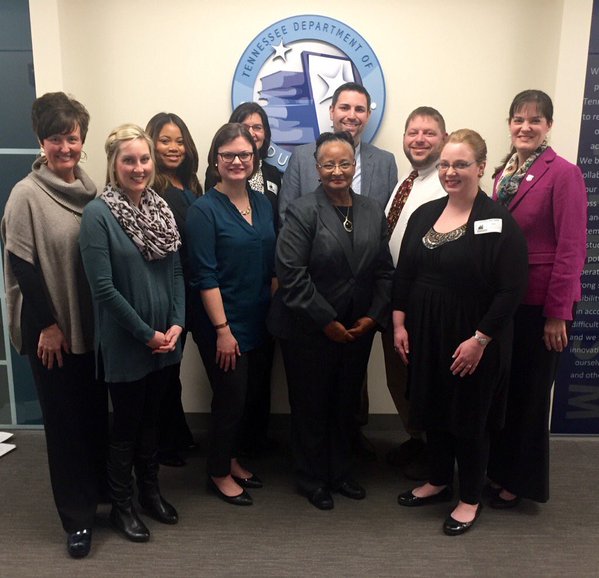
I was fortunate enough to go with a small group of Teacher Fellows to Nashville and present the report to Tennessee’s Commissioner of Education, Dr. Candice McQueen. Below is a picture from Hope Street Group’s meeting. I’m standing immediately to the left of Dr. McQueen.
McQueen picture
The short meeting went way beyond its scheduled time slot because she was interested in what educators had to say. Dr. McQueen asked many specific questions about the information contained in the report, and the Tennessee Department of Education is working on implementing some of the recommendations. It goes to show that, when allowed the opportunity, educator voice does make a difference. That fateful night in December was the first of many giant steps in the direction of elevating educator voice in Coffee County and throughout the state.

Another step in that same direction is this new “Tennessee Teacher Voice” blog. My vision for this blog is twofold. I intend to elevate educators' voices from my own county and from across the state by making the public aware of our solutions-oriented views on educational issues. I also want to highlight many of the positive activities occurring in educators' classrooms and schools of which the general public may be unaware. A quality education is the foundation of a thriving society. It impacts all of us!